Breathwork
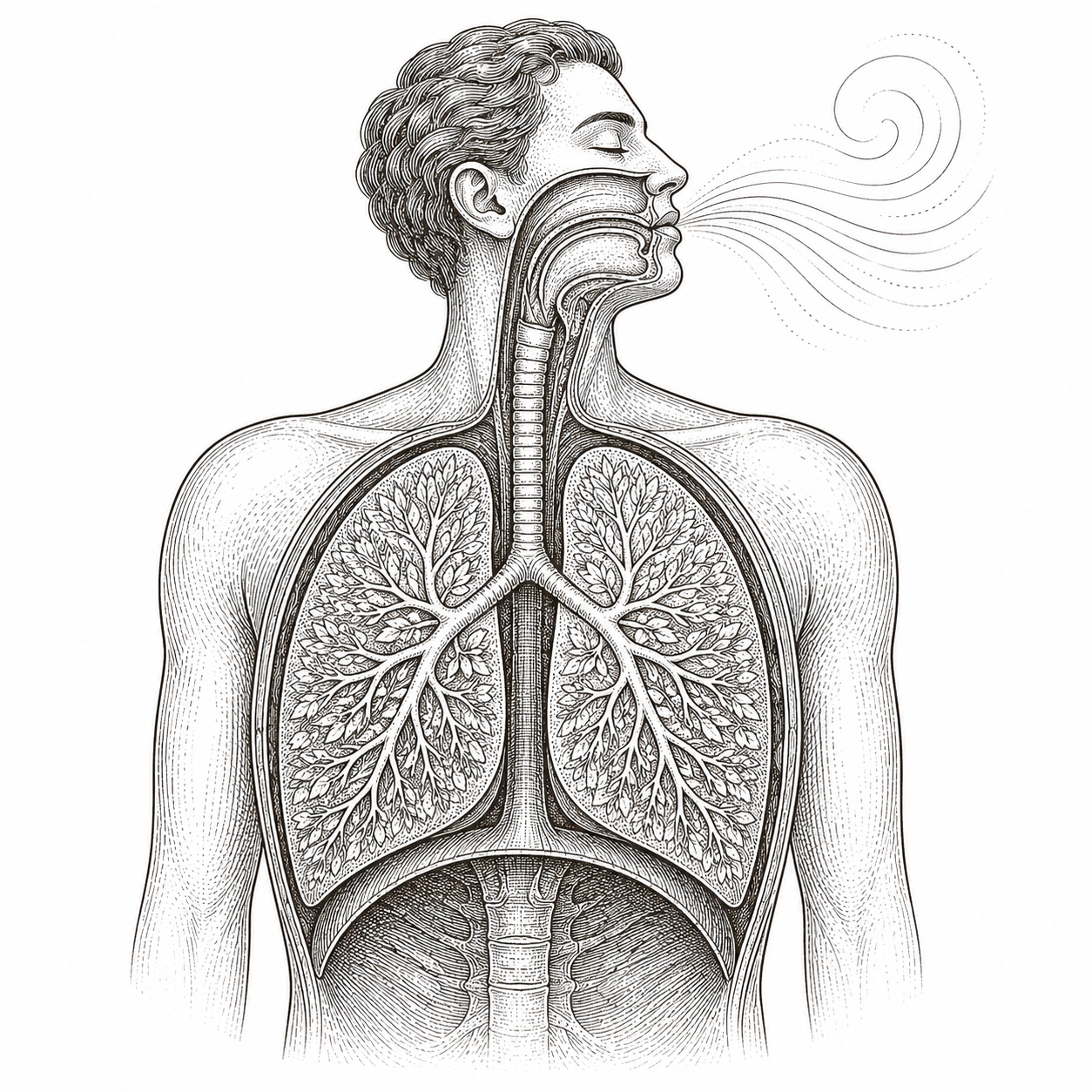
We breathe thousands of times per day, and almost never intentionally. Conscious breathwork practices reveal what is possible when we take direct control of this fundamental life function, not to override the body but to invite it into deeper ranges of experience.
At Mariri, we offer both active breathwork sessions, drawing on holotropic and conscious connected breathing approaches that can produce powerful non-ordinary states, and gentler pranayama practices rooted in the yoga tradition that build capacity, calm, and clarity over time. The style offered is always matched to the context: deep ceremonial breathwork before or after plant medicine work, or accessible daily pranayama as part of retreat morning practice.
In active breathwork sessions, participants breathe in a specific rhythmic pattern for an extended period while music is played. The process can produce states comparable to plant medicine: emotional release, visual experiences, body sensations, and profound insights. Unlike plant medicines, breathwork requires no substances; the shifts are catalyzed entirely by altered blood oxygen and CO2 levels and the body's own endogenous chemistry.
Breathwork is also one of the most immediately accessible tools for nervous system regulation available to anyone, anywhere. Techniques learned at Mariri become life practices, tools you can reach for in moments of anxiety, grief, or overwhelm long after the retreat ends.